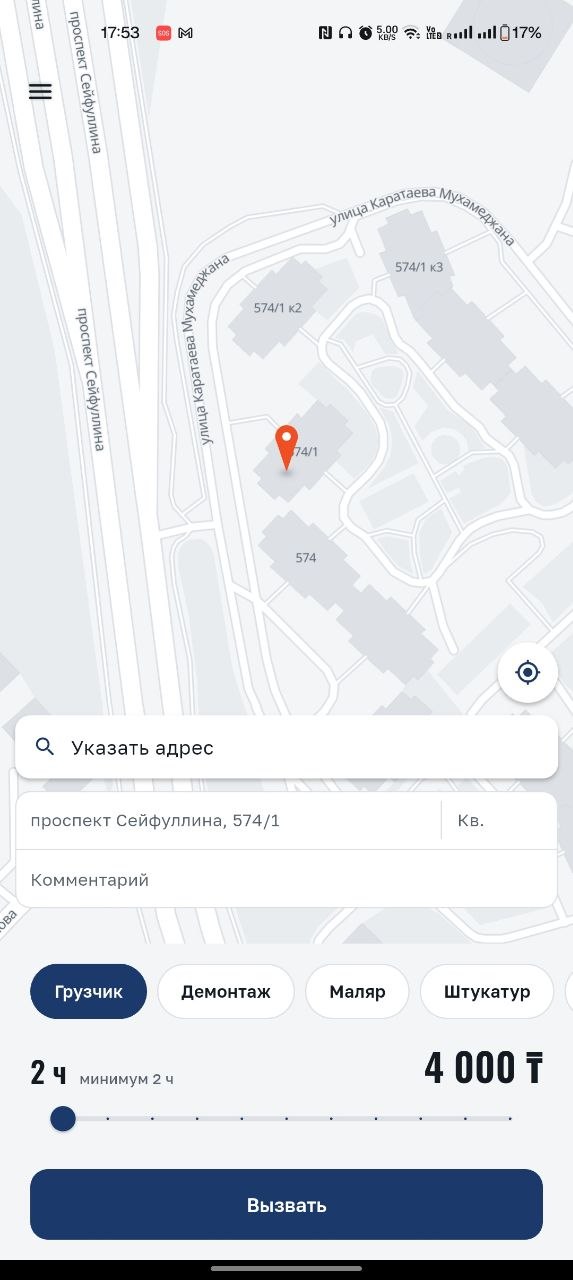
A building site means weak signal, dead phones and dirty hands. Three decisions were made precisely because of that, and each one shows up either in the bill or in reliability.
Sign-in without mobile data. The number is confirmed not by SMS but by a flash call: the phone rings for a couple of seconds and hangs up, and the code is the last digits of the number. It works where there is no data at all, and costs a couple of tenge instead of about twenty-five for an SMS.
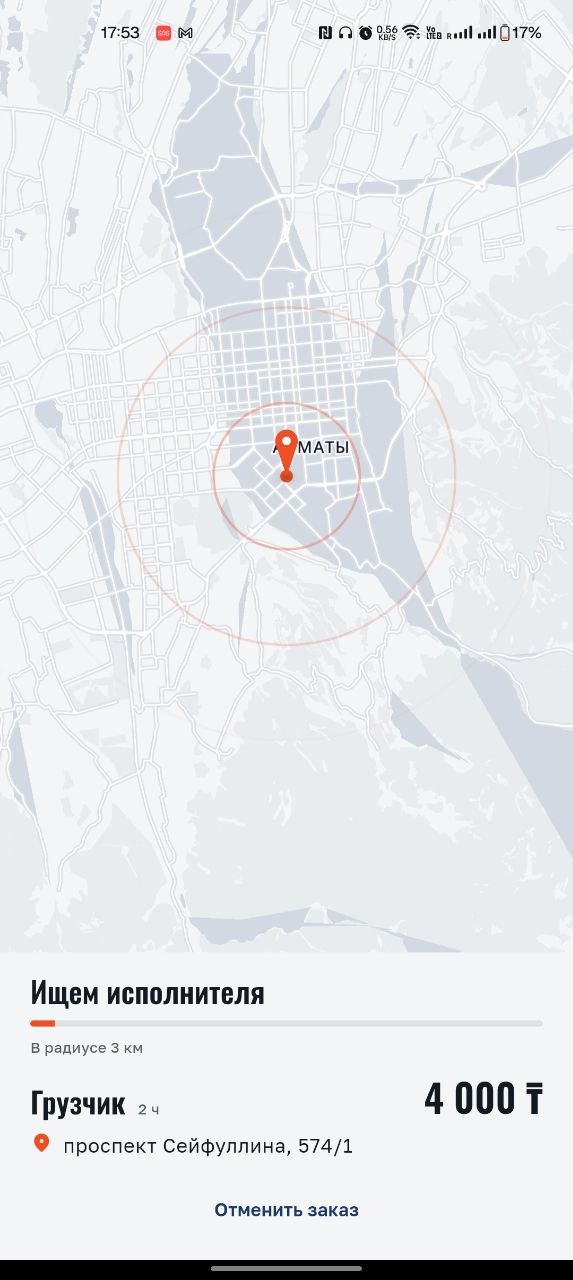
Matching without a background scheduler. The search radius is a function of the job’s age, not the result of a timer firing. A job that has been searching for five seconds is offered within three kilometres; a job that has been searching for a minute has already found nobody nearby and reaches further. Nothing has to be remembered between requests, so a server restart loses nothing.
A double tap breaks nothing. Every transition in a job is one conditional update in the database, checking the status the job is leaving. The database decides, not a read followed by a write. On a bad connection, two taps will not start the timer twice or bill twice.