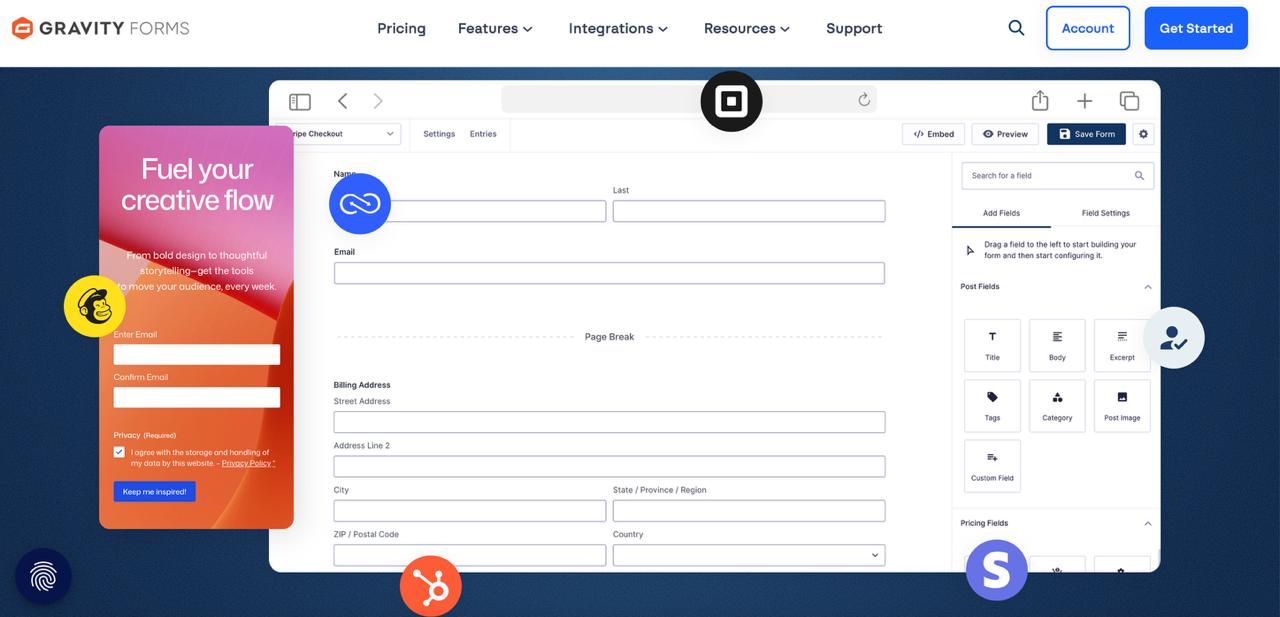
Forms on WordPress are infrastructure: applications, registrations and orders rest on them across an enormous number of sites. For seven years we worked inside that ecosystem — not on one site, but on the layer other developers build on top of.
Client
GravityKit (Katz Web Services) and Gravity Forms (Rocketgenius), USA
Years
2013 — 2020
Scope
Development (backend), architecture
Stack
PHP and WordPress, React, Svelte
The problem
Gravity Forms is one of the most widely used form solutions for WordPress; it runs at universities, international organisations and large companies. GravityView sits on top of it and turns accumulated entries into an application: catalogues, tables, maps, search and editing of records directly on the site.
Working on a product like that differs from working on a site. A mistake cannot be rolled back on one server: an update goes out to every installation at once. Backward compatibility is not a preference but an obligation to thousands of other people’s sites and plugins.
What we did
GF_Query — the query engine for form entries introduced in Gravity Forms 2.3: joins, conditions and sorting instead of assembling SQL by hand.
The GravityView backend: showing entries on the site, filtering, search and editing with no administrator involved.
Compatibility and performance on other people’s installations, which cannot be tested in advance.
Result
Code from 2018 still runs todayGF_Query went into Gravity Forms 2.3 and remains in the product: it executes on every site where those forms are installed. We left the project in 2020, and what we wrote keeps running every day, without us.
Why this one is us
Product development instils a discipline that client work does not demand: thinking about an update you cannot recall, and about compatibility with code you did not write.